

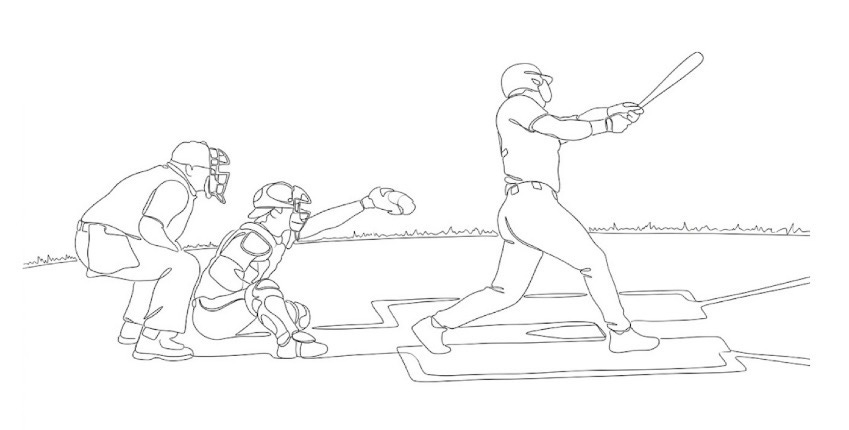
I always hated baseball. As a left-handed little leaguer, my options were limited. First base. Outfield. Pitcher. The glamour jobs — shortstop, third base, catcher — weren’t available to me. Those positions were for Righties.
The options shrank further. A pitcher was usually the best athlete on the team, the quarterback of the diamond. And the first baseman needed a great bat. My nearsightedness was an advantage to opposing pitchers. I saw the ball alright — late. Swing and a miss. The only position available to me was right field. The place where I could do the least amount of damage.
I quit playing baseball by the time I was fourteen. And while I got interested in football, basketball and lacrosee, baseball was always out there, somehow running like an app persistently updating in the background of my mind.
My grandmother was a rabid Mets fan. My stepfather, too. At any family function the two of them would get together and talk about the ups, and mostly downs, of the team from Queens.
Invariably, my stepfather Ed would talk about Bobby Thomson’s shot heard ’round the world. He was at the Polo Grounds when Thomson hit it. As an original Brooklyn Dodger (pre-Mets) fan, my grandmother Helen was on the other side of that miracle. But no matter what, they would agree on one lament: the exodus of the Dodgers from Brooklyn and the Giants from New York was one of the darkest moments in the history of the world.
They say baseball is something a father must hand down to a son. I started with my daughter.
She was a naturally gifted player — no doubt thanks to my wife’s genes. She played for a Little League Yankees team and has been a Bronx Bomber fan ever since. She went on to play highly competitive soccer but told me one day that she loved baseball and probably should have stuck with softball.
We raised our kids in Los Angeles, so naturally we’d go to Dodger Stadium as a family. That ballpark is magic. The way the light hits and the Googie architecture makes the place feel like it’s 1964 and the world is innocent and good.
My son became a Dodger fan and a keen student of the sport itself. He has a remarkable brain, and all of the stats light up his synapses. To this day I can ask him about any team or player and he’ll have a take and the numbers to back it up.
When we moved back to New York from LA, I decided to start paying attention to the Mets again. The team was doing well that season, a few games shy of the World Series.
In my spare time I read Roger Angell — the Shakespeare of baseball. I re-read Moneyball. I read Don Delillo’s “Underworld,” which as far as I can tell was partially about the aforementioned Bobby Thomson homer.
I’m now halfway through Jim Bouton’s classic, Ball Four, which reads like Catcher in the Rye if the catcher was actually Yogi Berra.
All of this has illuminated the nuance of the game. And that’s the thing with baseball, you have to be comfortable with nuance. The surface level is sort of dull. It’s the games within the game that make it fascinating. The pitcher painting the strike zone. The batter playing psychological games to gain some leverage. The ever-present threat of the bunt making a comeback.
Don’t get me wrong, there’s obvious stuff too. When the ball is in play there are always two options: sheer athletic grace or pure chaos — a grounder through the legs, a fly ball lost in the sun, a baserunner frozen between second and third like he’s forgotten his own name.
The last decade or so, the Mets have been true to their brand: high highs and low lows. Amazin’ and atrocious in equal measure.
So here I am. It’s May. The Mets are in last place, twelve games out of first, owners of the worst record in baseball. And what am I doing on a random Tuesday night? Watching the game.
In Ball Four my favorite line by Jim Bouton is: "You spend a good piece of your life gripping a baseball and in the end it turns out that it was the other way around all the time".